FLEUR ON
THE NILE
Why a second boat
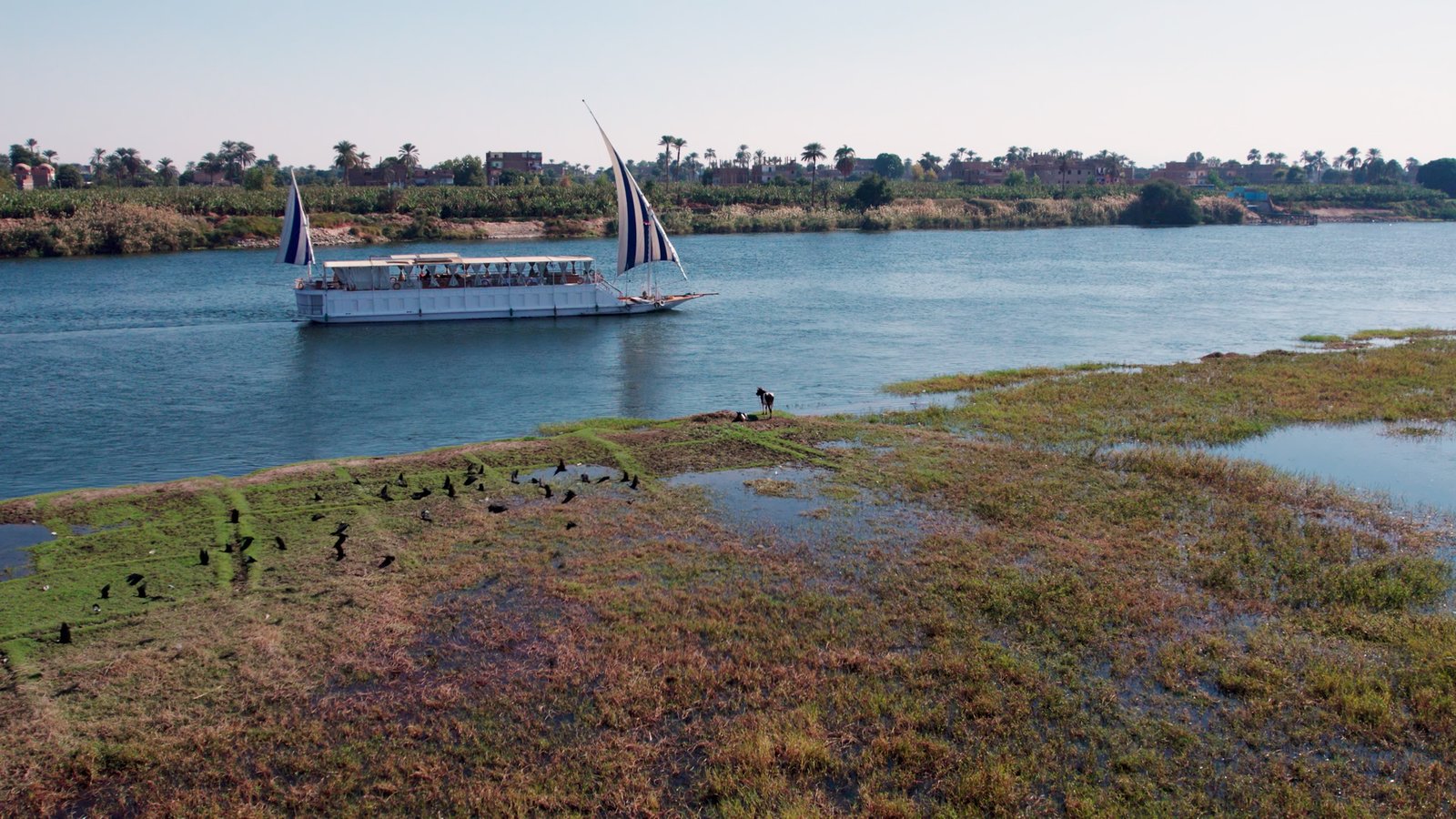
A dahabiya is a wooden sailing boat. The kind that carried Egyptian families and nineteenth-century travellers up and down the Nile long before tourism as we know it existed. Slow, low in the water and quiet enough .
We already ran The Nile Dahabiya, ten cabins, and it worked. But we kept hearing the same request from guests and from the agencies who send them: something smaller. A boat a family could take over entirely.
So Fleur joined. Seven cabins up to fourteen guests at most, on the same river and the same route. not a scaled-down version of anything. But designed for the size it is.
The best parts of this river have no dock, no road and no bus park. You reach them in something small or you don't reach them at all.
Fleur draws little enough water to moor below the quarry wall at Gebel el Silsila and to tie up at Ramady Island, a farming village with no road in. That access is the reason the boat is the size it is.
Seven cabins,
two with terraces
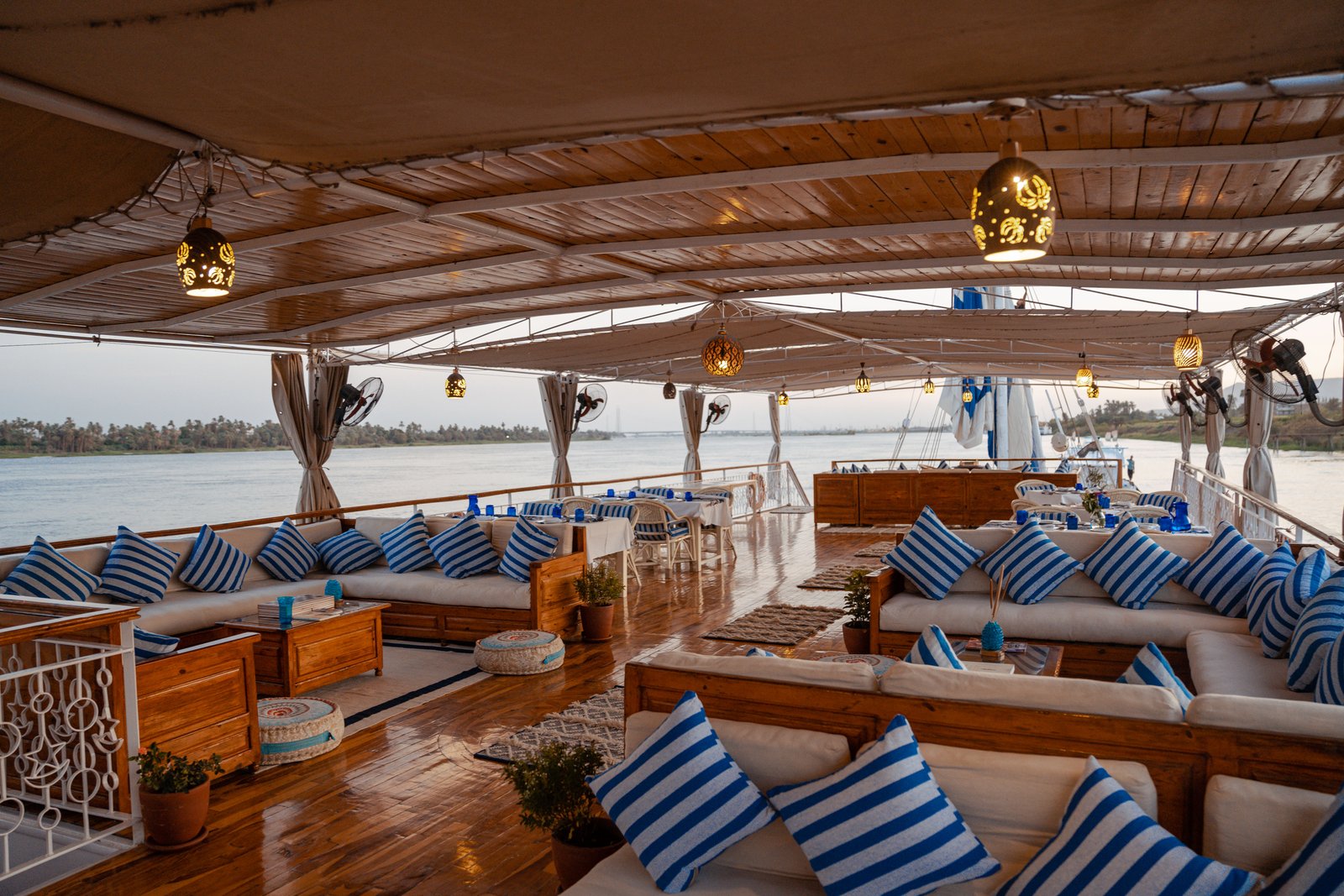
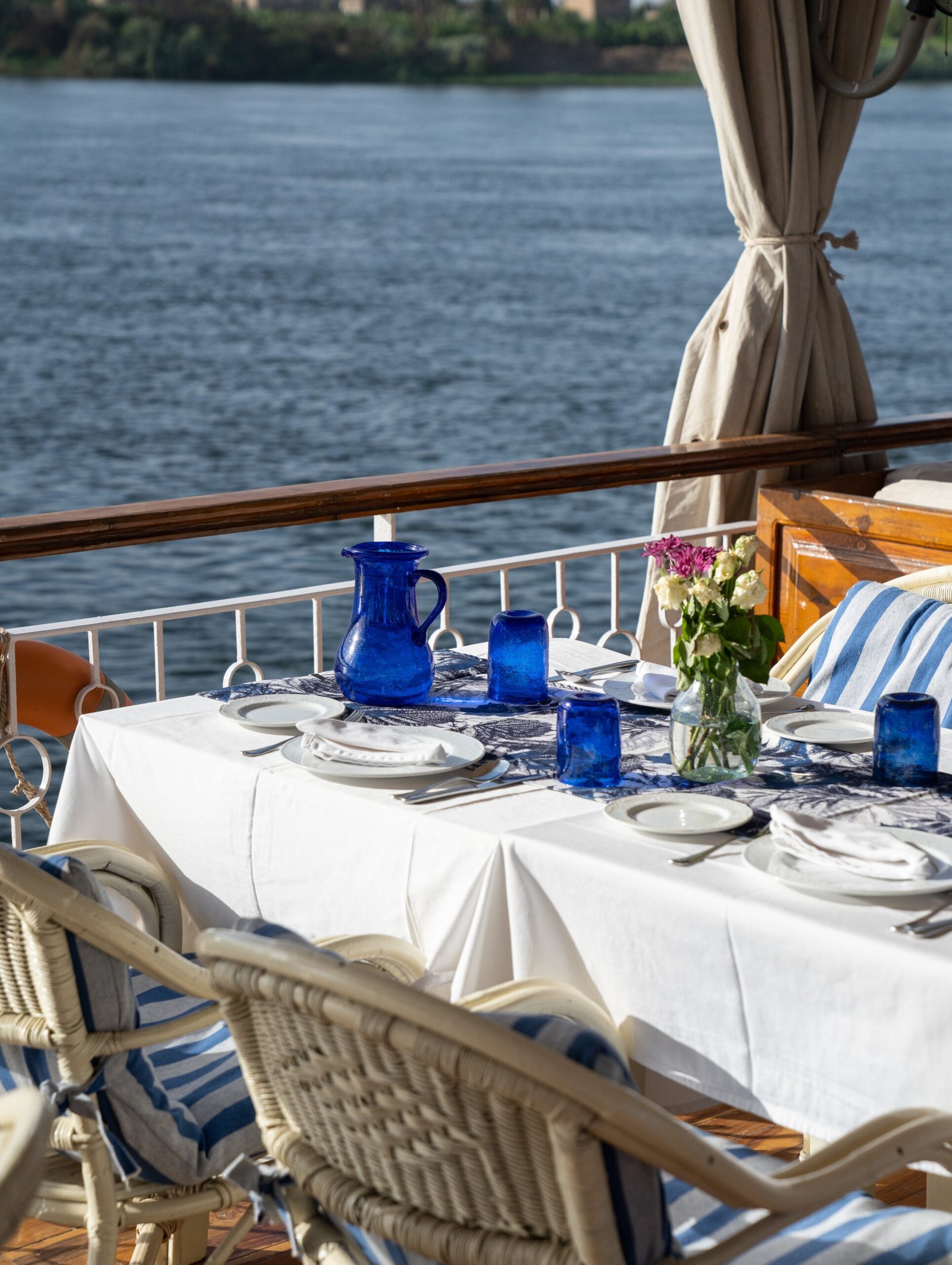
Fleur is built in the authentic style of the old dahabiyas. Heavy timber, hand carved woodwork and textiles from workshops on the west bank. The modern touches are there for comfort rather than show and they never take away from the feeling of being on a traditional boat. Below deck there are seven cabins. Two are suites with a king bed and a private terrace on the Nile, and five are standard doubles with a king bed or twins. Every one has an en suite bathroom, air conditioning, WiFi and a window on the Nile.
The kitchen cooks fresh every day, and shops in the villages we pass. Tell us in advance about anything you don't eat and it is handled without fuss.
Through the lock,
all the way in
We sail Luxor to Aswan in four nights, and Aswan to Luxor in three, twice a week from October through May. Both routes stop at Edfu, Kom Ombo and Gebel el Silsila, with El Kab or Ramady Island depending on the direction.
One difference is worth stating plainly: most dahabiyas on this river finish at Esna and put their guests in a car for the last hour into Luxor. We go through the Esna Lock and arrive by water. It costs us time and it is the reason people who have done this before choose us again.
Friendly, but not friends
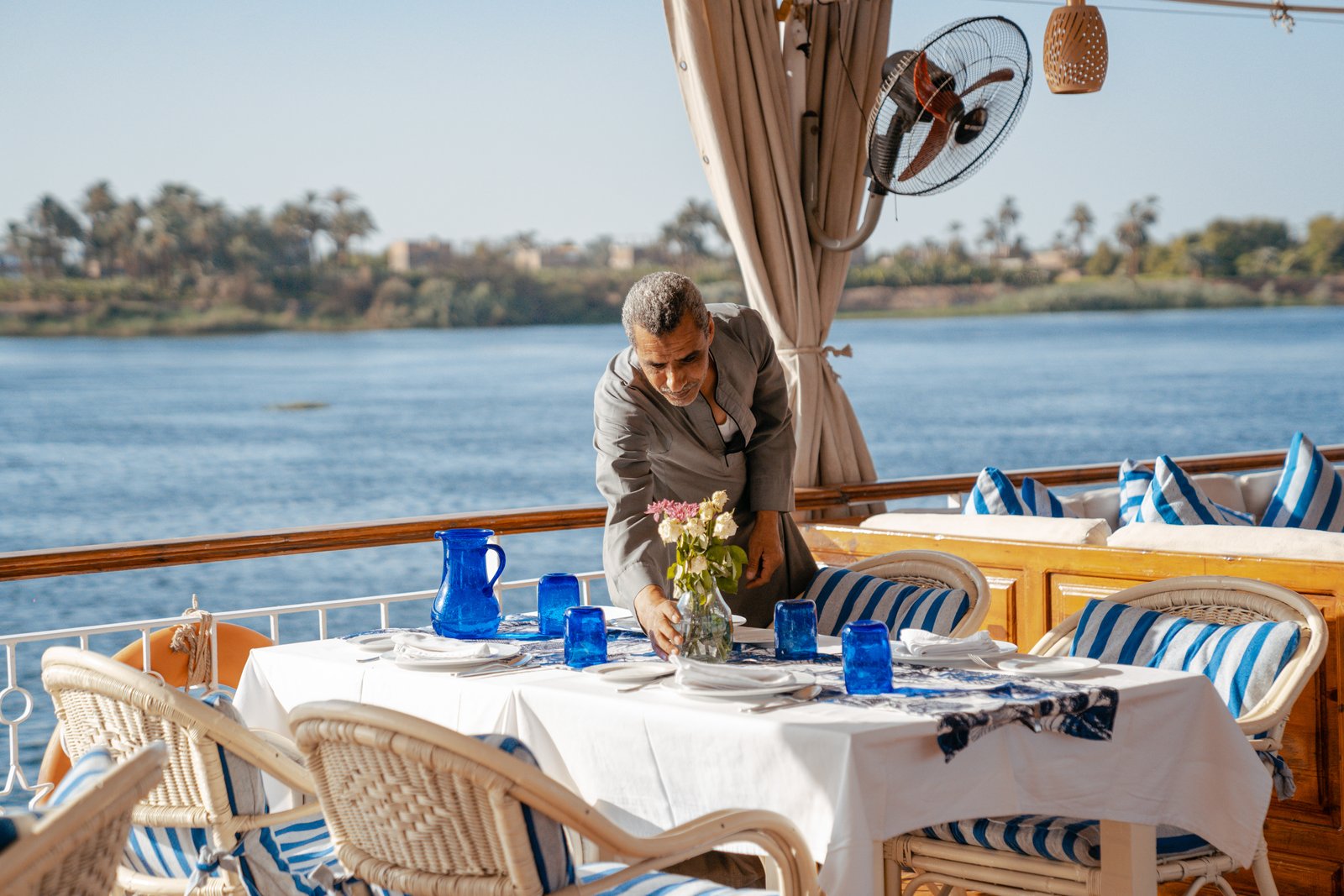
The crew are Egyptians and nearly all of them come from Luxor or Aswan. The captain has worked this stretch of the Nile for over twenty years and reads it the way you would read a familiar road. The cook trained in a village kitchen on the west bank.
They will make you feel at home from the first day. Your tea arrives the way you like it by the second morning and nobody has to ask your name after the first evening.
There is a line we keep though. You are here to rest and to look at one of the oldest landscapes in the world. So the service is warm and it is there when you want it, and the rest of the time you are left alone with the Nile going past.
What guests describe afterwards is rarely the temples. It is which site is better in the late afternoon because of what the shadow does to the carving, or which family in the village will wave you in for tea. That comes from living on the same river a long time.

Fleur is operated by The Egyptian Company for Sailing Ships under Trade Licence No. 59300, a brand of The Nile Dahabiya. Our operations meet Egyptian maritime regulations for passenger vessels on the Nile.