ASWAN TO LUXOR
DAHABIYA NILE CRUISE
Four days, three nights
on the Nile
This program leaves Aswan at midday on Wednesday and reaches Luxor on Saturday morning. Three nights on board and four days of travel.
You see Philae on the first afternoon then Kom Ombo and Gebel el Silsila on the second day. Edfu and El Kab follow on the third and Karnak and Luxor Temple on the last morning. Nights are spent beside Herdiab Island and on the west bank of Luxor.
The last day goes through the Esna Lock and into Luxor on the Nile. Most dahabiyas end at Esna and put their guests in a car for the final hour. We do not, so you step off within reach of Karnak on one bank and the Valley of the Kings on the other.
Every temple visit is led by a licensed Egyptologist. Entrance fees, transfers and gratuities are all in the price.
- International and domestic flights
- Egypt visa fees
- Alcoholic beverages and personal expenses
- Anything not listed in the program
Philae Temple
& boarding
Your journey begins in Aswan, boarding Fleur around midday. Lunch is served as you settle into the rhythm of the river, which is slower than whatever you arrived from.
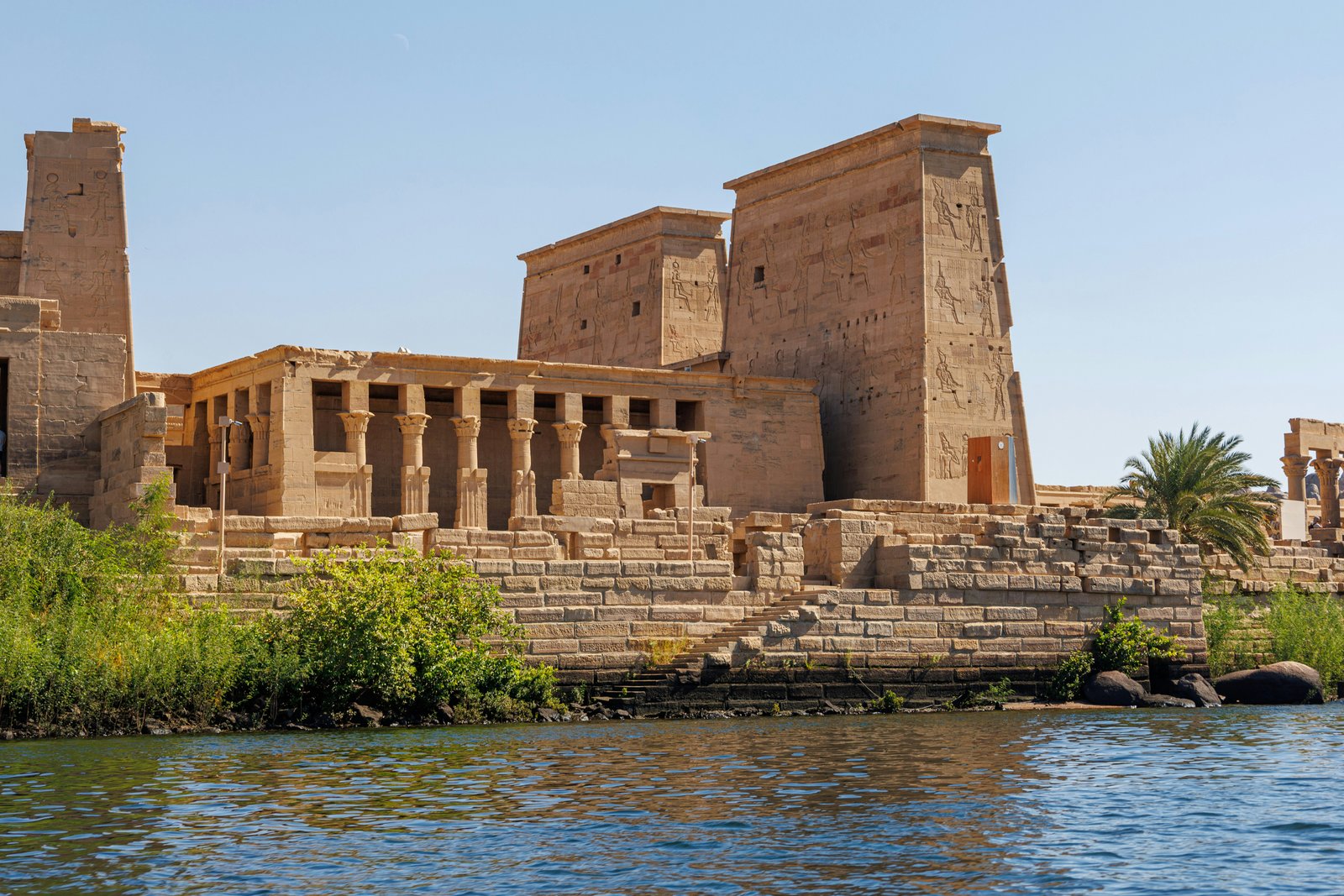
The afternoon goes to Philae, the island temple of Isis, rebuilt stone by stone on Agilkia Island between 1972 and 1980 to save it from the rising water behind the dams. It was one of the last working temples of ancient Egypt, with the cult of Isis carrying on here into the 6th century AD. You arrive by boat, through granite.
Afterwards Fleur sails south toward Herdiab Island, one of the quietest moorings on the river. Dinner on board, then a night beside the island with nothing around you.
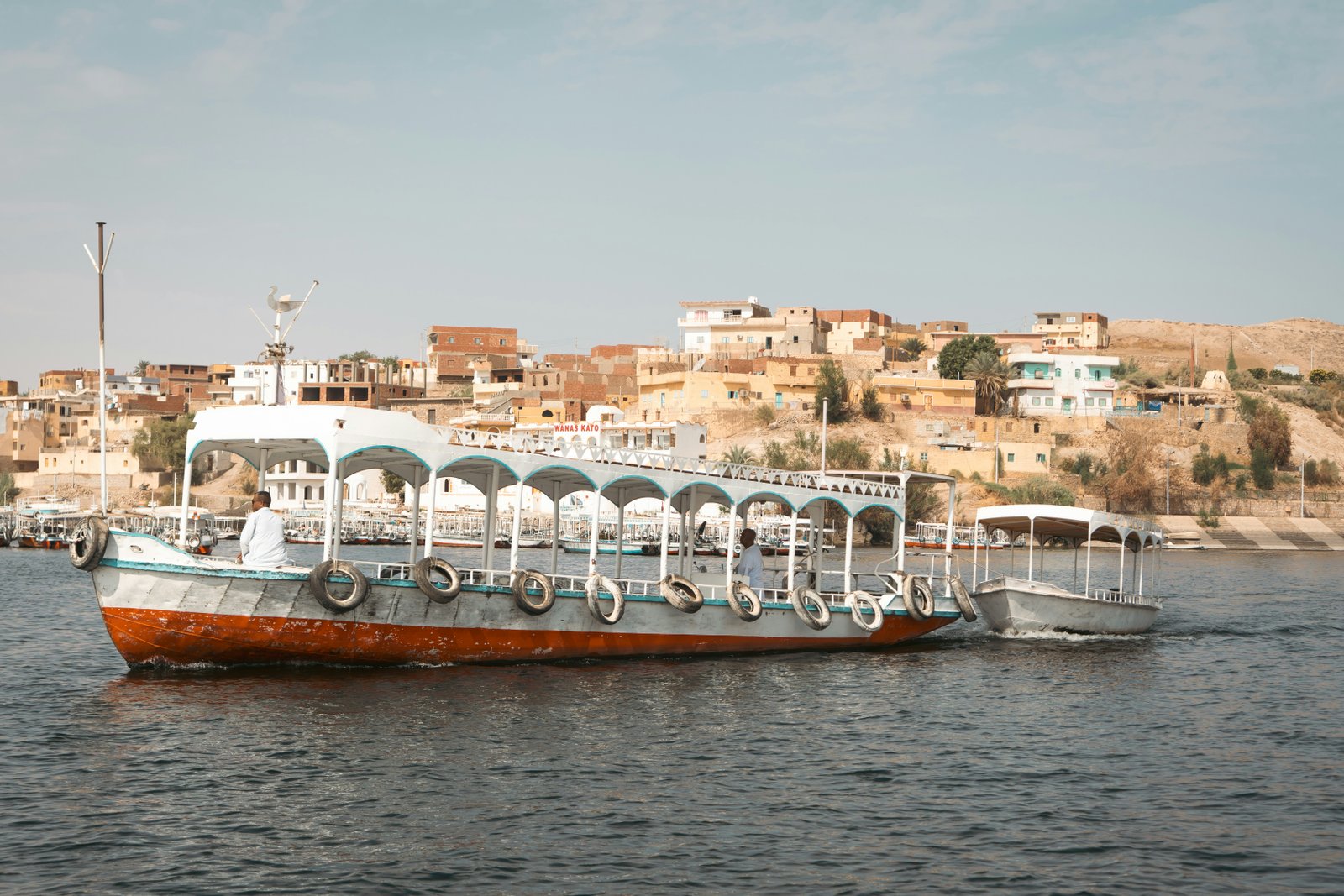
 Aswan. Granite islands, hard light, and a narrower river than anything.
The double temple
& the quarry cliffs
Breakfast on board while sailing toward Kom Ombo. It is the only temple in Egypt built symmetrically for two gods at once: Sobek the crocodile god on one side, Haroeris on the other, with two entrances, two halls and two sanctuaries. It stands on a promontory above a bend, so the river is in view from inside on three sides.
We continue to Gebel el-Silsila, where the Nile runs through a sandstone gorge quarried for three thousand years to build Egypt's temples. The shrines cut into the rock face are still there, and large boats cannot stop here at all.
Lunch is served under way. In the afternoon we sail on toward Edfu, watching the villages and the farmland go past. Dinner on board.
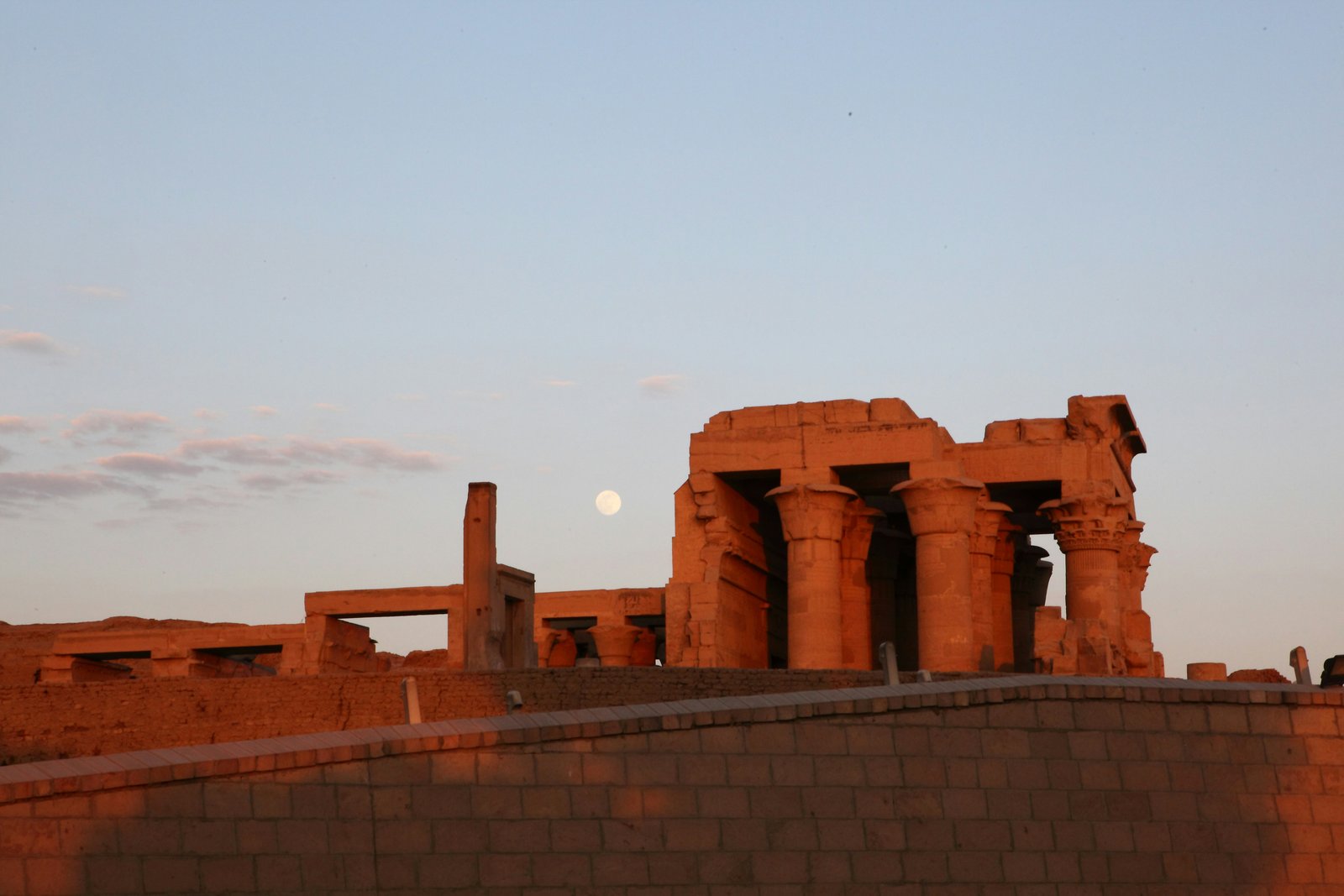 Kom Ombo, built for two gods, with two of everything.
Temple of Horus
& El Kab
Breakfast on board, then the Temple of Horus at Edfu, the most completely preserved ancient temple in Egypt. Reliefs cover nearly every surface inside and out, and the astronomical ceiling recording the hours of day and night is largely intact.
Then El Kab, an ancient city on the east bank inside a mud-brick wall over twelve metres thick at its base. The New Kingdom tombs cut into the cliff above carry painted scenes of hunting, farming and family life rather than royal ceremony, which is exactly what makes them worth the climb.
Back on board for lunch while sailing north toward Luxor. In the afternoon comes the crossing of the Esna Lock. Dinner is served under way, and the night is spent on the west bank of Luxor.
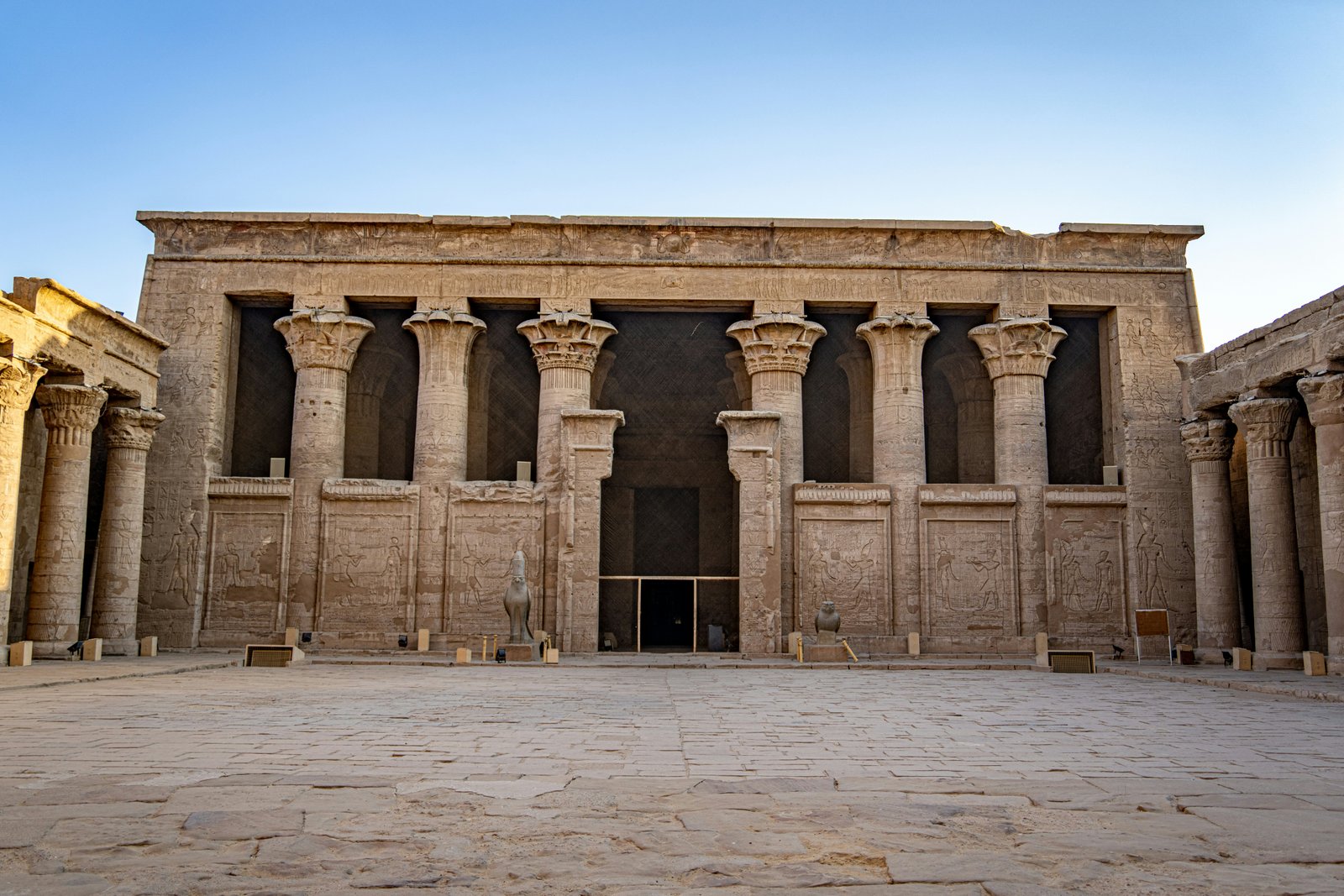 Edfu in the late afternoon, before the next day's crowds arrive.
Karnak, Luxor Temple
& disembarkation
A final breakfast on board, and disembarkation at 08:00.
The morning goes to the east bank. Karnak is the largest religious complex ever built, worked on for more than 1,300 years, and the Hypostyle Hall with its 134 columns is not something photographs prepare you for. Luxor Temple sits in the middle of the modern city, connected to Karnak by an avenue of sphinxes.
And there the journey ends, in the middle of Luxor rather than an hour away in a car.
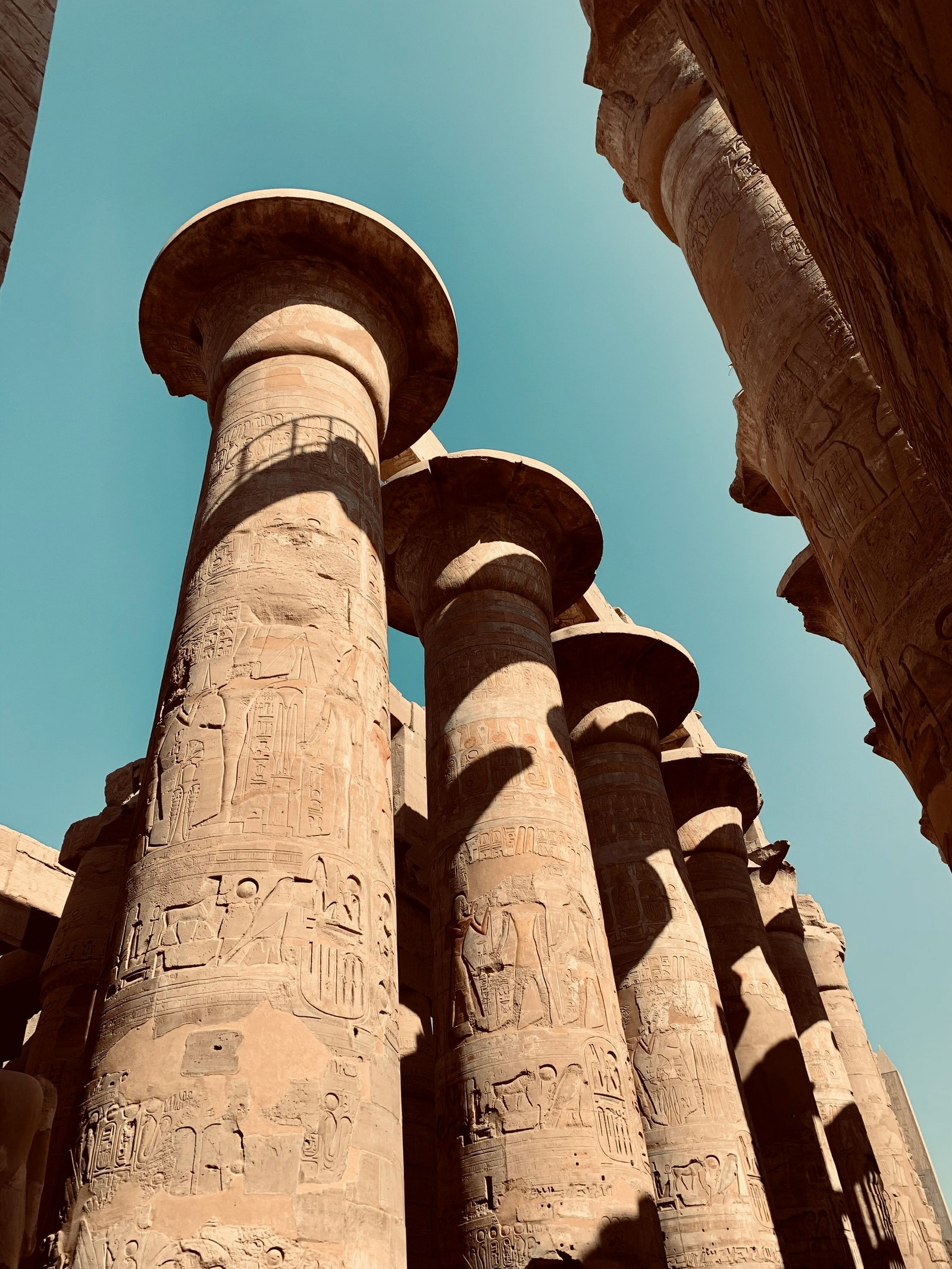 Arriving in Luxor by river. It is a different arrival from the back of a minibus.